
WEEK 14
Introduction
Cookery Topic:
Chocolate
Cookery Method:
This week, we will be tempering chocolate to make various types of truffles. We will be using the seeding method to temper the chocolate.
Dishes:
Honey Ganache Truffles, Tea Ganache Truffles, Gold & Irish Cream Ganache Truffles
Prior Knowledge:
I have melted chocolate for previous labs for the chocolate mousse and ganache. I have made hand- rolled truffles before, but I have never used the seeding/ injection method for making truffles.
Learning Objectives:
We will learn how to "temper chocolate couverture. Use tempered chocolate for molding. Produce a variety of chocolate decorations. Make chocolate truffles and other chocolate confections, including dipped chocolates." ( Gisslen ,2021, pg. 647)Tempering chocolate to the right temperature is important when creating chocolate decorations and chocolate truffles. The right temperature needs to be reached, so the chocolate properly sets.
Gisslen, W. (2021). Chocolate [E-book]. In Professional Baking (8th ed., p. 647). Wiley.
Background
Scientific principles:
Tempering chocolate improperly causes a longer
Inspiration

Dark Chocolate Honey Truffles - Recipes. (n.d.). Sliško Honey. Retrieved April 13, 2022, from http://sliskohoney.com/recipes/dark-chocolate-honey-truffles/

Hartbeck, J. & The Spruce. (2021, November 29). [Photograph of Matcha Green Tea Truffles Recipe]. https://www.thespruceeats.com/matcha-green-tea-truffles-521505

Tastemade. (n.d.). Disco Ball Truffles. Retrieved April 13, 2022, from https://www.tastemade.com/videos/disco-ball-truffles
setting time, dull finish, and wrong texture. The reason for tempering is: melted cocoa butter cools and solidifies; it will form six different kinds of crystals. The melting temperatures will vary depending on the type of crystal. The crystals with the highest melting point. The high melting point crystals give the high quality the shine and its "snap" ( snap is a good indicator for proper tempering). "If the chocolate contains too many unstable crystals, it will set slowly have a dull surface with streaks of cocoa butter, and have poor, crumbly texture. If there is a white coating on the poorly tempered or untempered chocolate is called bloom. "( Gisslen, 2021, pg. 649)
Origin:
"The cacao tree originates in the western hemisphere, where it grows in tropical climates from northern South America to southern Mexico. Long before the European discovery of the Americas, native peoples, including the Mayans and Aztecs, brewed a bitter, unsweetened beverage from the beans, which they had learned to ferment and dry. The cacao tree grew in limited areas, so the pods were prized and became objects of trade. They were even used for currency. In addition, they were important in religious ceremonies. Spanish conquistadors disliked the bitter, black beverage the natives brewed from cacao, but they soon learned to appreciate it and began carrying cocoa beans back to Europe in the 1500s. Availability was limited at first, but by 1700 cocoa had spread throughout much of Europe."( Gisslen, 2021, pg. 648) Its use was still mostly as a beverage, but Europeans liked it more when it was sweetened. Cocoa can be used as a medicine and as a cooking spice. In the early 1800s, a Dutch chemist and chocolate maker named Coenraad Johannes van Houten developed a process for removing much of the cocoa butter from raw cocoa, using a powerful press. He "discovered that processing the cocoa with an alkali yielded a milder product with a darker color. This " dutching" process is still used today for some cocoa. Manufacturers discovered that by adding cocoa butter back to ground cocoa, they could make a smooth paste that hardened into blocks. in 1842, the Cadbury brothers ( George and Richard) began selling block chocolate in England. In the 1880s, the Swiss Rudolph Lindt invented the conching process to make a smoother product. Around the same time, another Swiss, Daniel Peter, created milk chocolate by adding dried milk to the paste. ( Dried milk had been invented by Henri Nestle. " ( Gisslen, 2021, pg. 648)
Methods used:
For tempering chocolate, there is the tablage method and the seeding or injection method. The seeding or injection method is an easier method for beginners. "The first step is to chop the chocolate into smaller pieces. The next step is to cut shreds or shavings from a block chocolate. Melt the chopped chocolate as in method 1. Remove the melted chocolate from the water bath, Stir in some of the shaved chocolate. When these shavings are nearly melted, add a few more shavings. Continue adding and stirring chocolate until the melted chocolate is cooled to the proper tempering point. Do not add the shavings too fast. Rewarm the chocolate as in method 1."( Gisslen, 2021, pg. 651)
Variations:
There are multiple variations that vary in grade for the coating layer and ganache filling. There is dark, milk, and white chocolate as the coating layer. The ganache fillings can be flavored with fruits, nuts, honey, butterscotch, peanut butter, teas, marshmallow, and chocolates. The garnish of truffles can be edible powder, sprinkles, gold or silver edible foil, crushed nuts, tea powder, peppermint, cinnamon sugar, and fruits.
Gisslen, W. (2021). Chocolate [E-book]. In Professional Baking (8th ed., pp. 648, 649,651). Wiley.
Recipes


Plan of Work
_edited.jpg)
Reflection:
Food Costing


Results
Final Plating
Stages of Lab

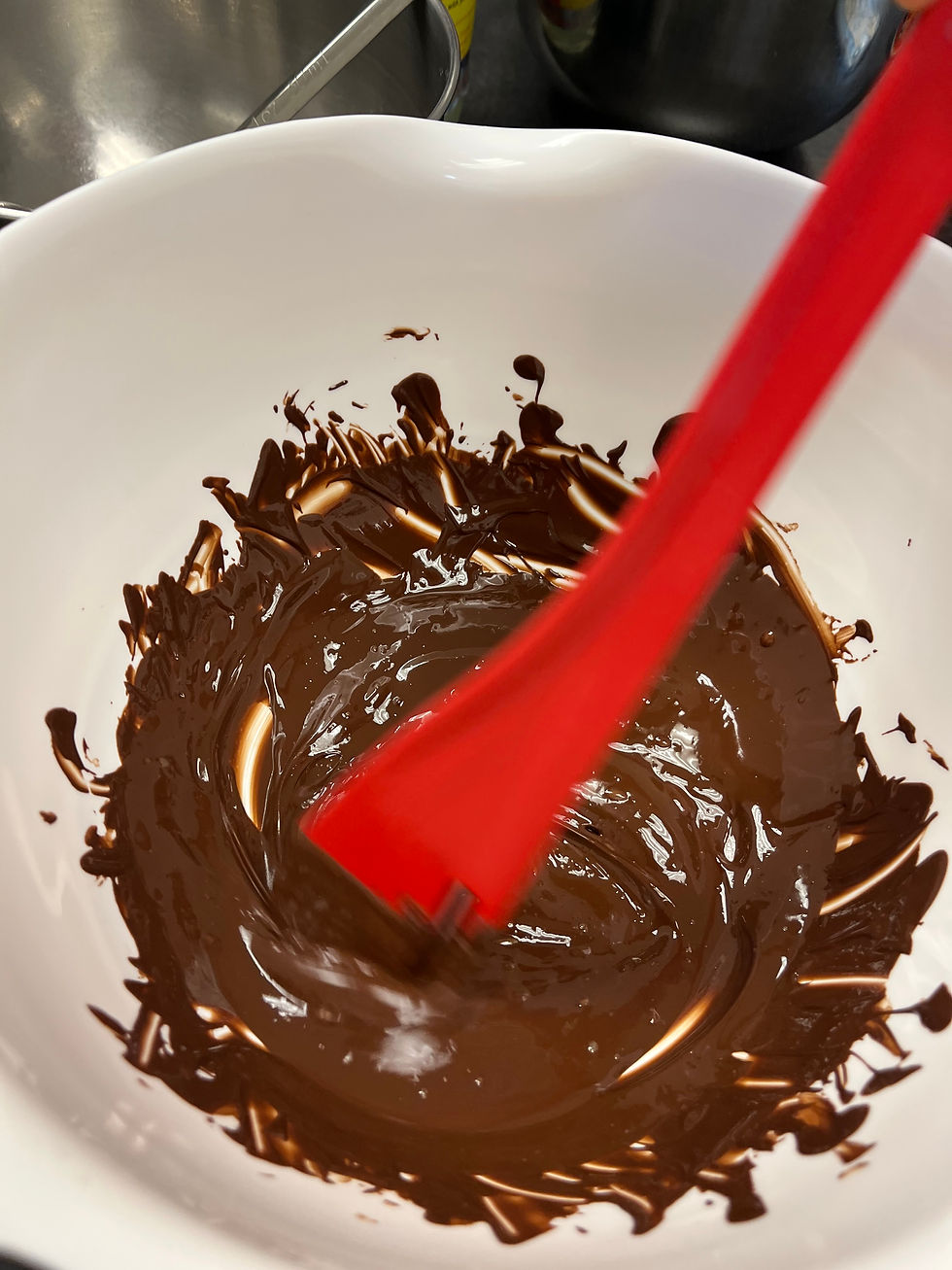


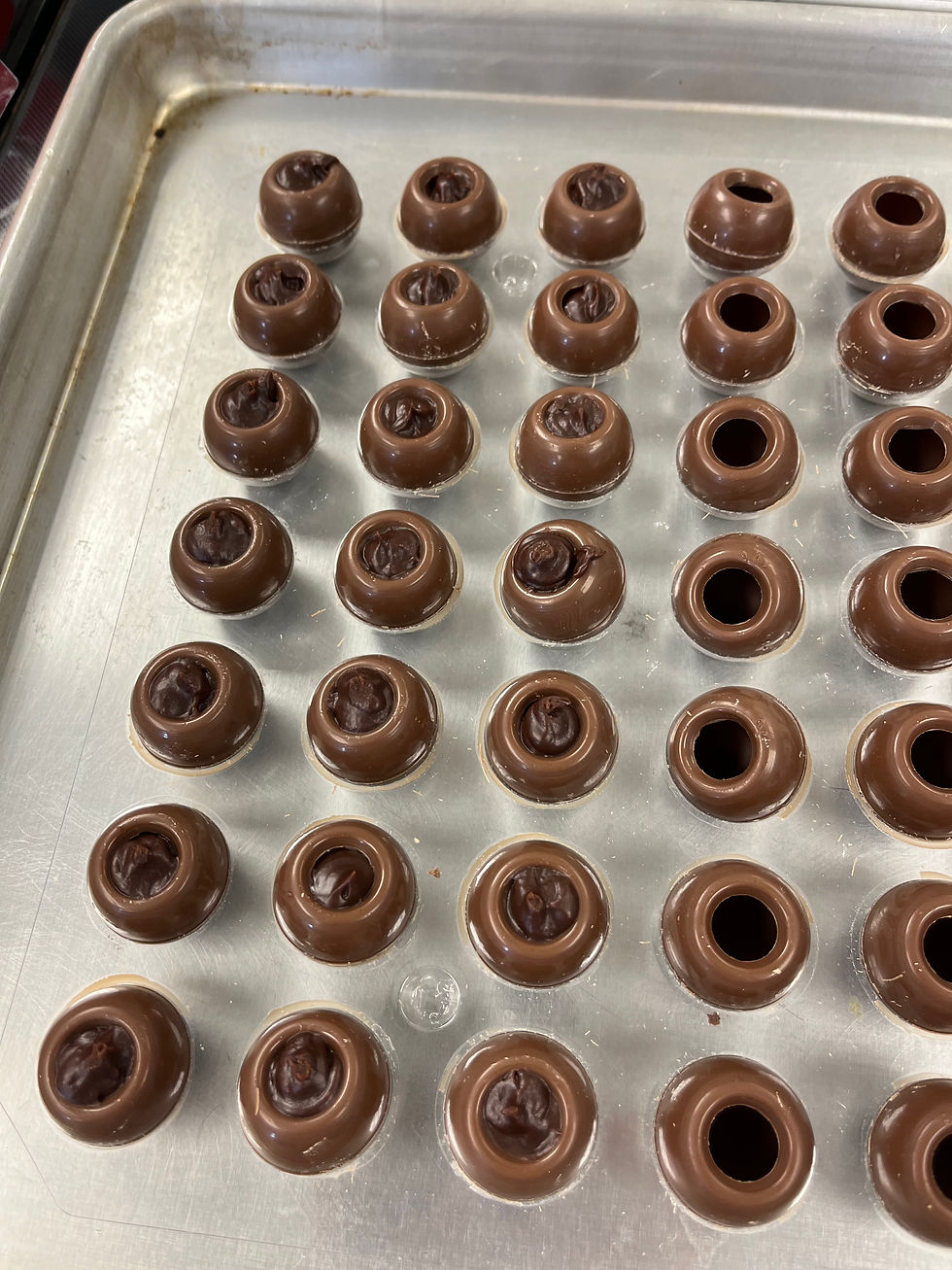


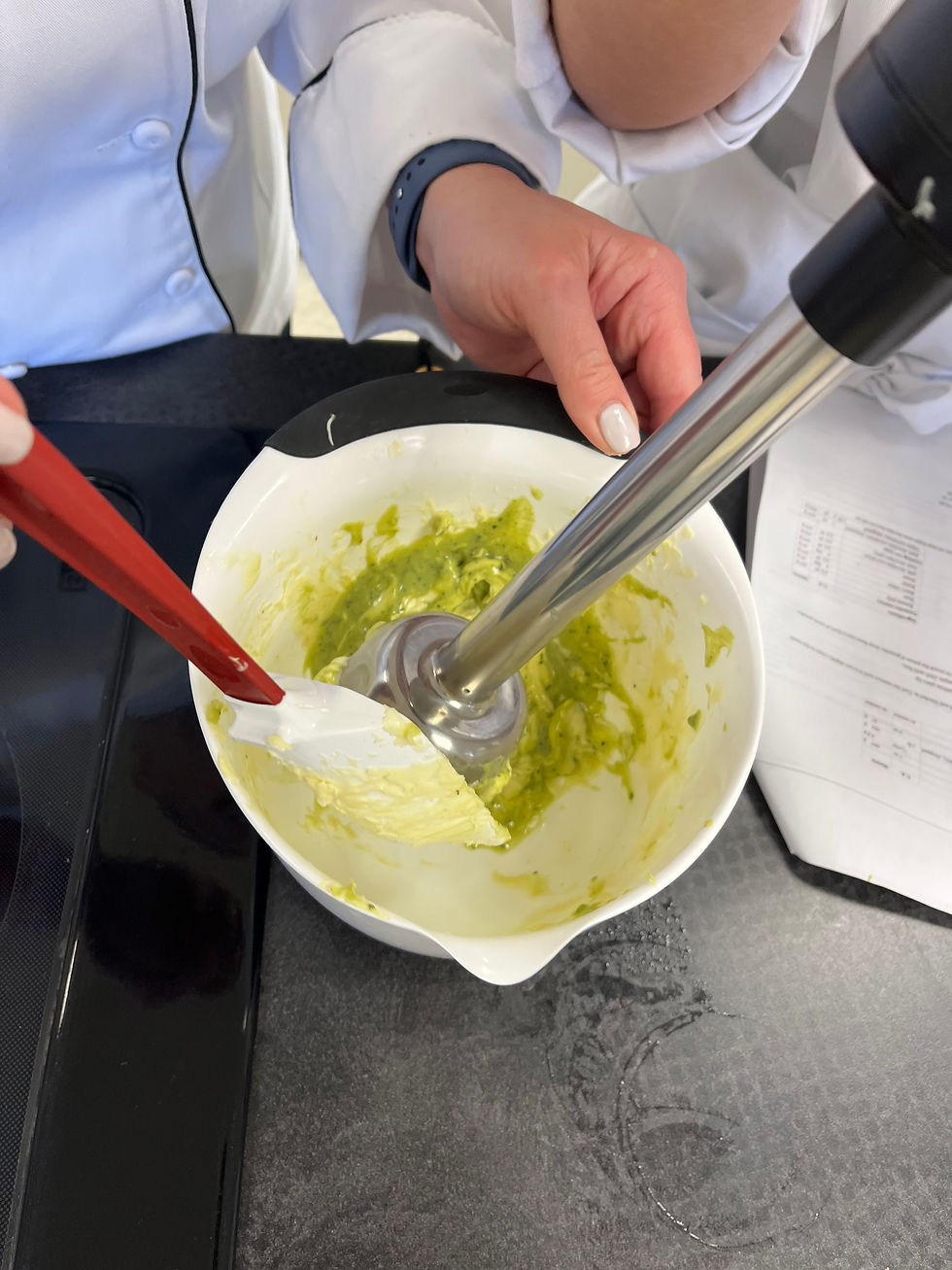


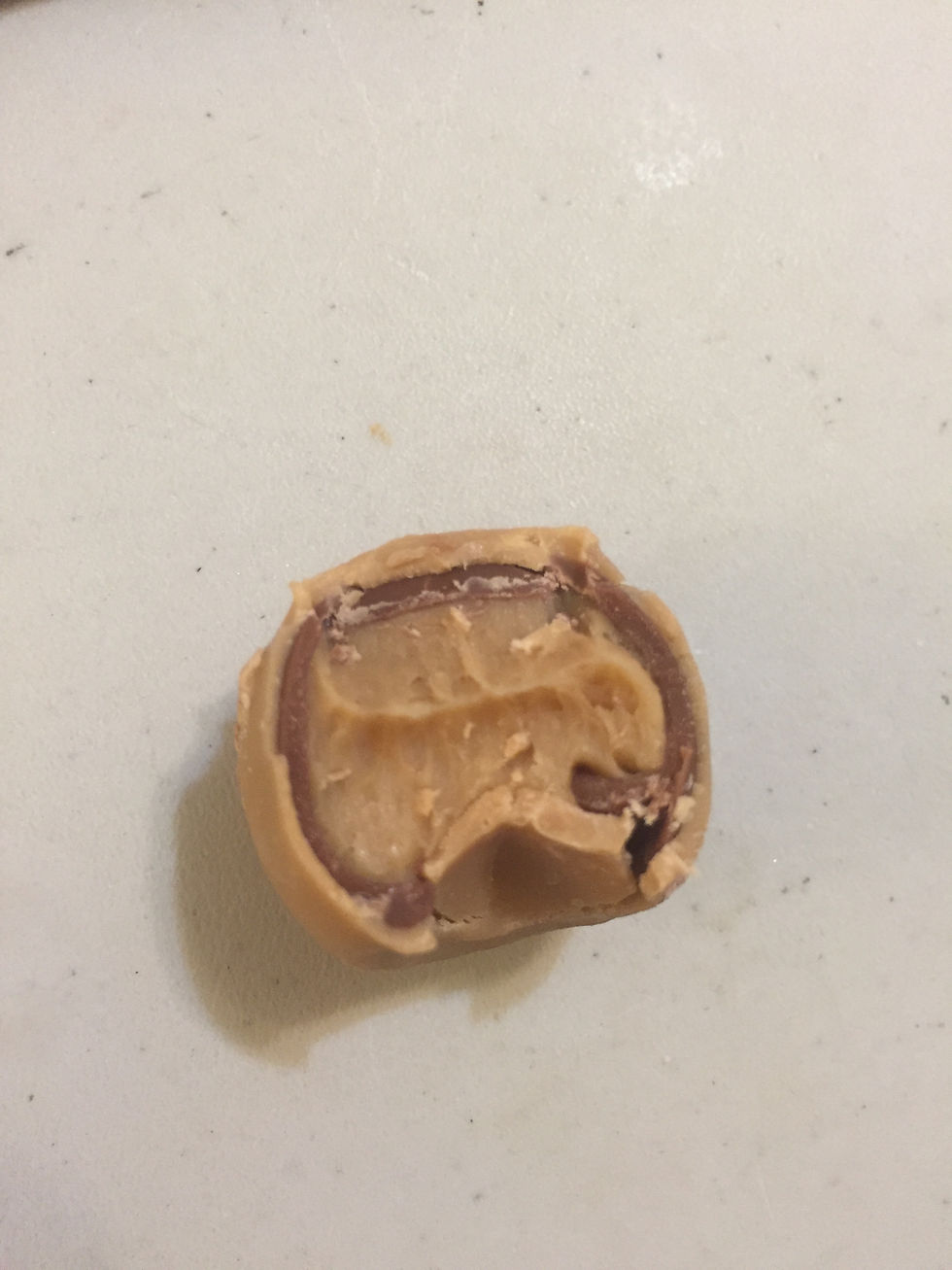
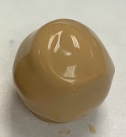
The cooking technique for the truffles did work. The texture of the Honey Ganache Truffles' filling was thick and silky. The taste is sweet, where the inside and outside layers are both sweet. The honey ganache filling is slightly more bitter, as it is dark chocolate. The flavor of honey is not strong, as the dark chocolate flavor is the most prominent flavor. The appearance of the filling is a darker brown, while the outside layer is a lighter brown ( milk chocolate). The texture of the Tea Ganache Truffles was smooth and silky. The taste is sweet and a slightly bitter, from the Sencha bio and Matcha tea. The flavor of the teas compliment each other with the chocolate, where the bitterness of the teas offsets the sweetness of the milk chocolate. The appearance of the tea ganache truffles have a light green filling, while the couverture is a light and dark brown. The green and brown colors compliment each other, as the green gives a sense of freshness to the chocolates. The texture of the Gold & Irish Cream Ganache Truffles was slightly liquid- like and silky. The taste is sweet and slightly citrus from the Baileys, and the chocolate adds sweetness to the truffles. The flavor of the Baileys is strong, where the GOLD Chocolate adds a caramel flavor. The appearance of the filling is golden brown, which contrasts with the chocolate. The chocolate shells were shiny, and the outside layer was a bit matte.
Evaluation
The tempering technique did work with creating all of the ganache filling. The honey ganache truffles, where the honey was easily incorporated into the ganache. Blending the cream mixture and the melted chocolate with the immersion blender created a smoother finish. The tea ganache must have the teas strained, but there was not much liquid left over. The tea leaves soaked up a lot of liquid. During the mixing stage of the chocolate and tea mixture, the filling amount was too small, and it was hard for the immersion blender to mix it. The size of the bowl could have also contributed to this, as the bowl was too big for the small amount of mixture .One way to add more liquid is to strain the leaves as soon as the liquid has been steeped long enough. A shorter steep time may help with creating more liquid. For next time, we switched to a smaller bowl for the Gold & Irish cream filling. The switching of the bowls did make a difference, and the immersion blender was able to mix better. During the enrobing step, the white chocolate did not reach the right tempering temperature, which caused a more matte finish. We were running short on time and, the tempering time was cut short for the white chocolate. For next time, we will melt all of the chocolates at the same time, so there is enough time to melt and dip the truffles. The Gold and Irish cream ganache filling was a little bit more liquid- like, and one of reasons is that we forgot to add butter to the chocolate. For next time, we will add the butter, so the texture will be thicker and create more of a shine. The Baileys flavor was strong, and it was little bit stronger than expected. The butter may lessen the Baileys flavor. During the dipping process, the chocolate hardened, so we had to heat it up again. Some truffles did not have full coverage on the outside layer, which may have occurred due to the chocolate cooling down. For next time, it may be best to leave it on the double boiler to maintain the internal temperature.
Conclusions
I feel I did the best at creating the ganache filling for the truffles, as all of the fillings had the right texture. We were able to reach the right tempering temperature for the fillings. I learned that chocolate can become finicky when the temperature starts cooling down. There is a small time window to create fully coat the chocolates. There will be certain time- sensitive tasks that will need to be done in short time frame, so it is crucial to get it done as quickly as possible ( while maintaining consistent results). I feel I still need work on being quicker for certain task, as time sensitive tasks can postpone the overall production of the dish.