
WEEK 7
Introduction
Cookery Topic:
Pastry Basics
Cookery Method:
This week, we will be learning pastry basics. We will learning how to make and bake pate a choux and swiss meringue. We will be prepping pate brisee, short dough, and puff pastry for next week's tarts. We were laminating the puff pastry.
Dishes:
Pate Brisee, Short Dough I, Classic Puff Pastry, Swiss Meringue, Pate a Choux, and Pastry Cream
Prior Knowledge:
I have made pate a choux 3 times a while ago, but my first two attempts were not successful. I have made a Italian Meringue at home before, but I have not made a Swiss Meringue. I am familiar with the folding technique for the puff pastry, as we did a similar technique for the croissants.
Learning Objectives:
"Prepare pâte brisée and short pastries.
Prepare puff pastry dough, blitz puff pastry dough, and reversed puff pastry dough, and make simple pastries from these doughs.
Prepare pâte à choux (éclair paste), and make simple pastries from it. Bake meringue and meringue-type sponges, and assemble simple desserts with these meringues." ( Gisslen, 2021 pg. 329) This week, we will be learning how to make 1-2-3 ratio doughs, where it is 1 part sugar, 2 parts fat, and 3 parts flour.
Inspiration

Wasik, V. (2021, March 11). [Choux Pastry (Pate a Choux)]. Serious Eats. https://www.seriouseats.com/choux-pastry
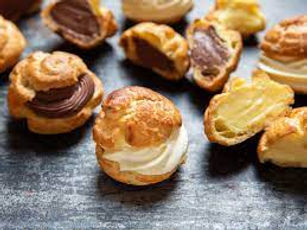
Wasik, V. (2021, March 11). [Cream puff]. Serious Eats. https://www.seriouseats.com/cream-puffs
Sketch

Gisslen, W. (2021). Professional Baking (8th ed.). Wiley.
Background
Scientific principles:
"When the dough is beaten, the gluten structure begins to form and stretches to hold the steam, the heat sets the protein. The outside structure should be golden brown with a hollow center crisscrossed with soft filaments of dough. The flour is added after the boiled butter and water mixture , so the starch can swell and absorb the liquid. This also creates structure to a cream puff or other pastry using pate a choux. The amount of fat is crucial, as too much fat will inhibit the gluten ,and the puffs can collapse. Eggs are the leaving agent and emulsifier to the pate a choux dough. The eggs help create a light and smooth texture, and egg whites canused for a crisper puff. " ( Larsen, 2019)
Origin:
"Catherine de Medici's head chef, Pantanelli invented the choux pastry after moving to France in 1540. He used paste to make gateaux and pastries, which spread across France. The unique shape after the baking step created its name 'choux'( French word for cabbage. By the 19th century, Antoine Careme refined and perfected it. " ( Bakerpedia, 2021)
Methods used:
Pastry cream is a common filling for cream puff, eclairs, and other pate a choux pastries. Standard procedures for making pastry cream is: " Boil sugar and milk , and beat eggs yolks and whole eggs with a whip in stainless steel bowl. Cornstarch and sugar is sifted into the egg mixture. Beat the egg mixture until the surface is completely smooth. Temper the egg mixture by slowly adding in the milk mixture. Bring the mixture back to the heat and to a boil, continuously mixing. Once it reaches a boil, boil for an additional two minutes or until the cream no longer has a starchy taste. Remove from the heat. then stir in the butter and vanilla. Make sure butter is completely melted and fully incorporated. Pour into a shallow hotel pan and cover with plastic wrap that is touching the pastry cream surface. Cool and chill as quickly as possible. When filling pastries, be sure to whip the chilled cream into a smooth texture before using. " ( Gisslen, 2021, pg. 273).
Variations:
The variations of pastry cream can be deluxe pastry cream, pastry cream mousseline, chocolate pastry cream, praline pastry cream, and coffee pastry cream. There is also fruit flavored pastry cream as well. Pate a choux can be used for sweet or savory baked goods. Savory choux puffs' fillings could have cheese, meat, and/ or vegetables. ( Gisslen, 2021, pg. 273)
Choux Pastry | Baking Processes. (2021, September 8). BAKERpedia. Retrieved February 27, 2022, from https://bakerpedia.com/processes/choux-pastry/
Gisslen, W. (2021). Basic Syrups, Creams, and Sauces. In Professional Baking (8th ed., p. 273). Wiley.
Larsen, L. (2019, January 21). Learn the Science Behind Crisp and Light Cream Puffs. The Spruce Eats. Retrieved February 27, 2022, from https://www.thespruceeats.com/cream-puff-science-481231
Recipes


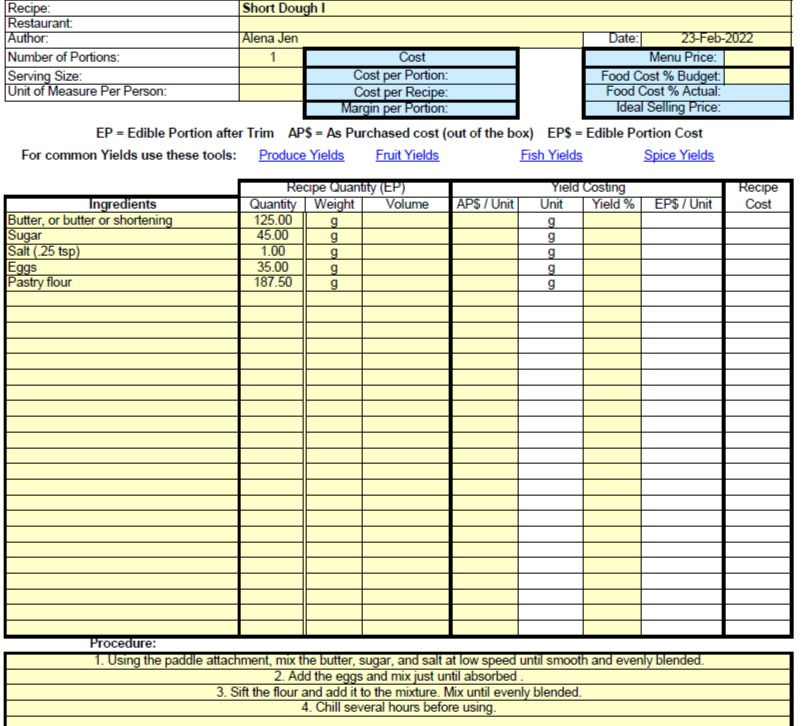


Plan of Work
_edited.jpg)
Reflection:
Food Costing


Final Plating
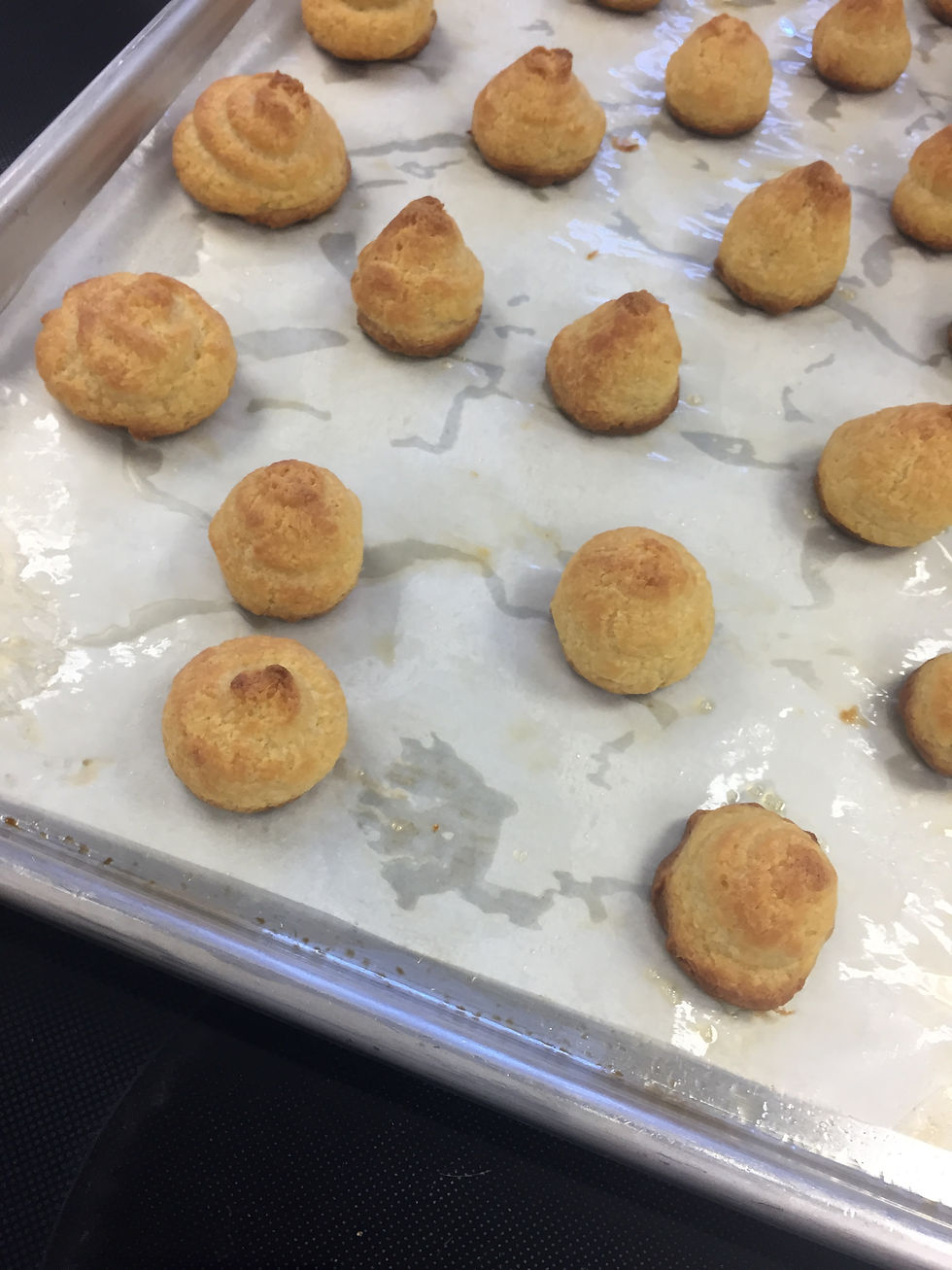

Stages of Lab

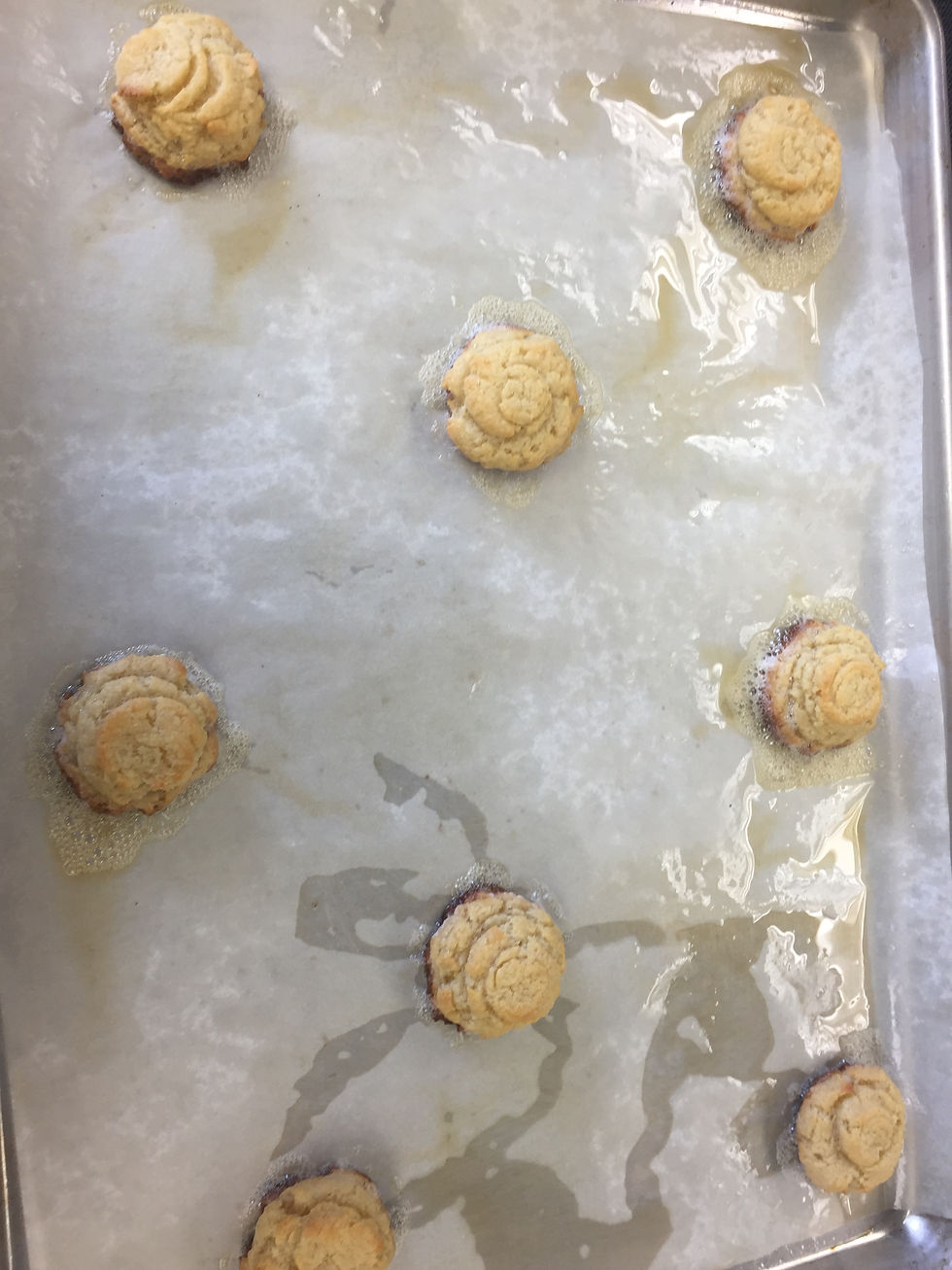





Results
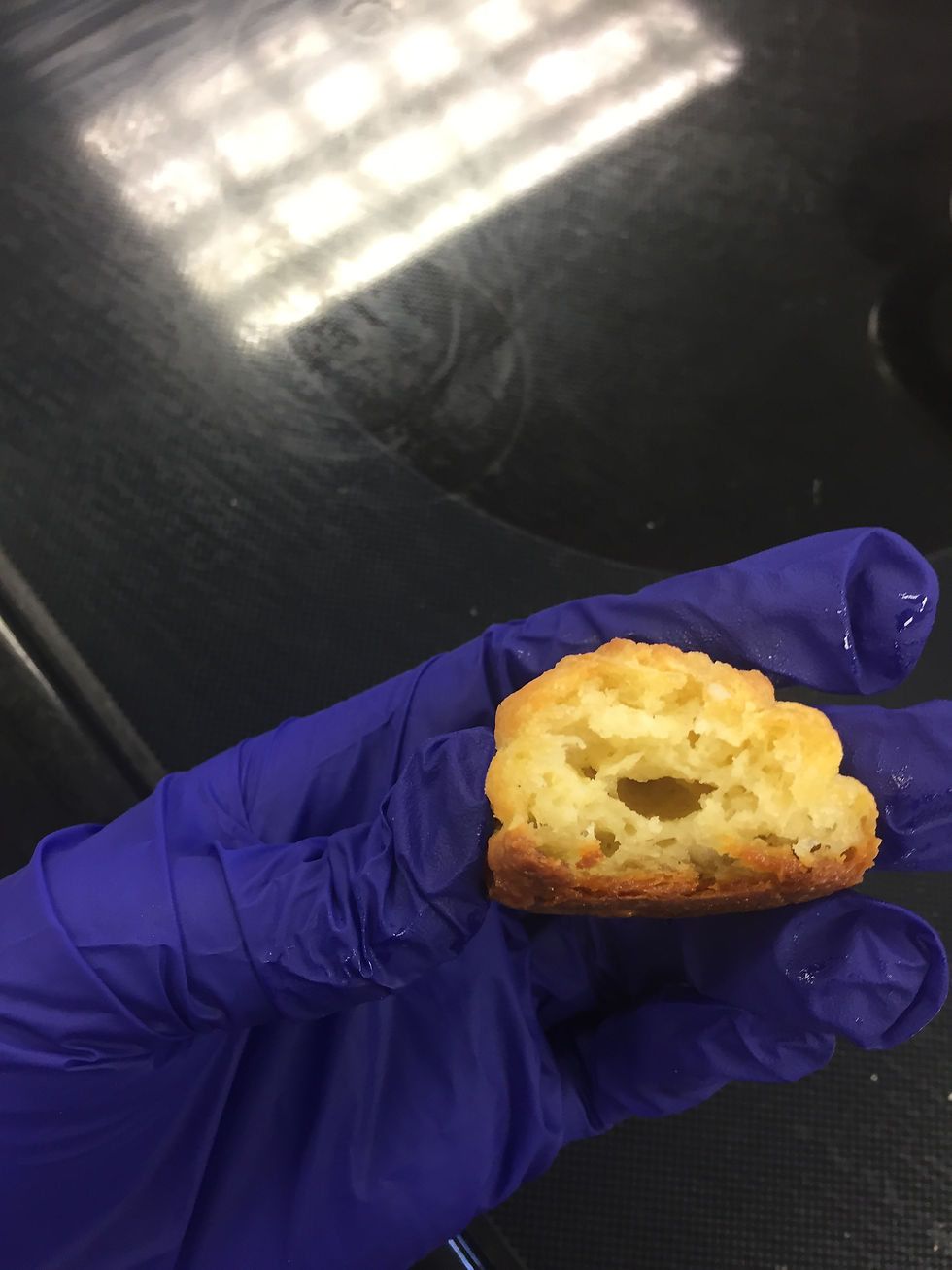
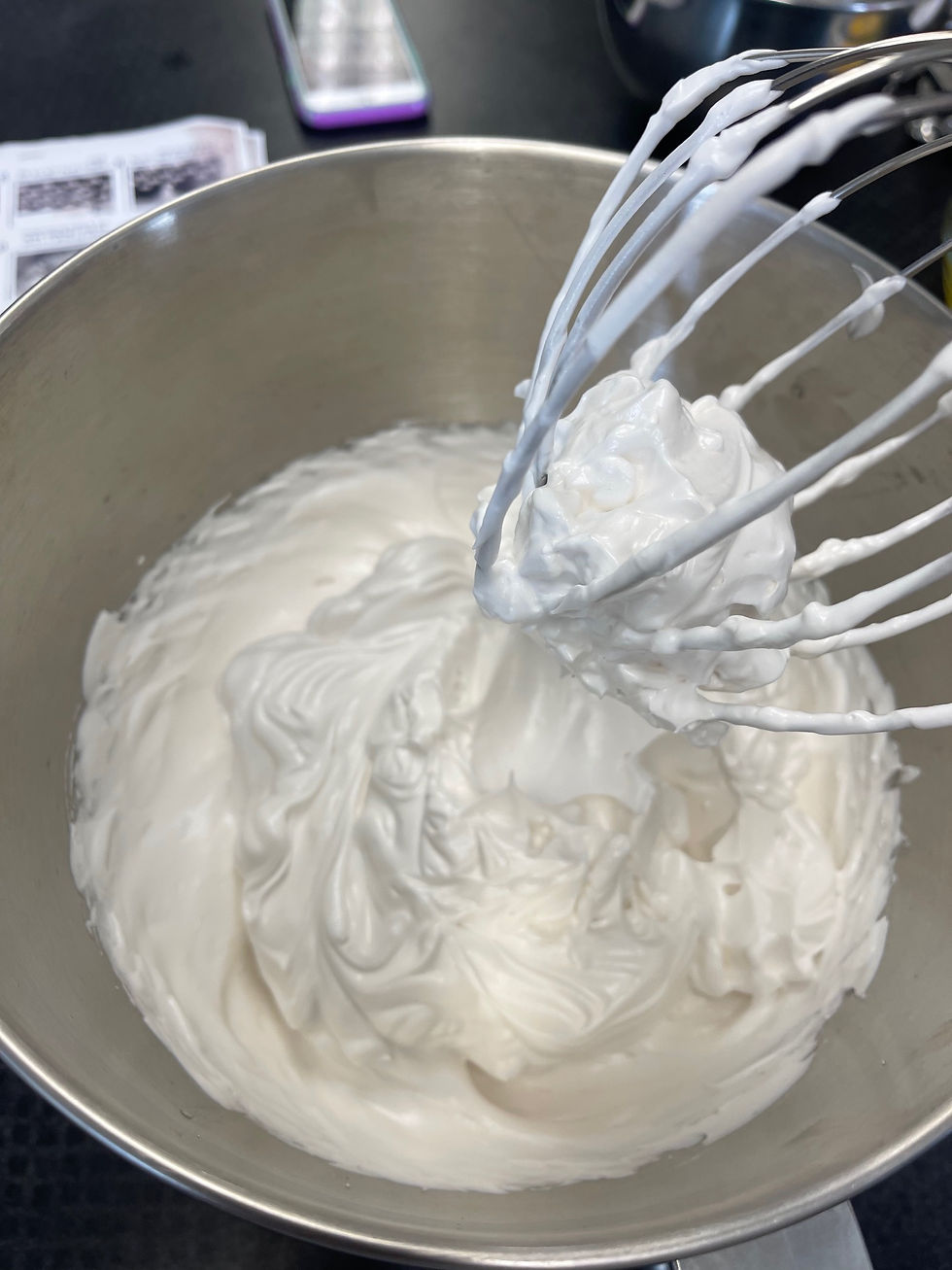
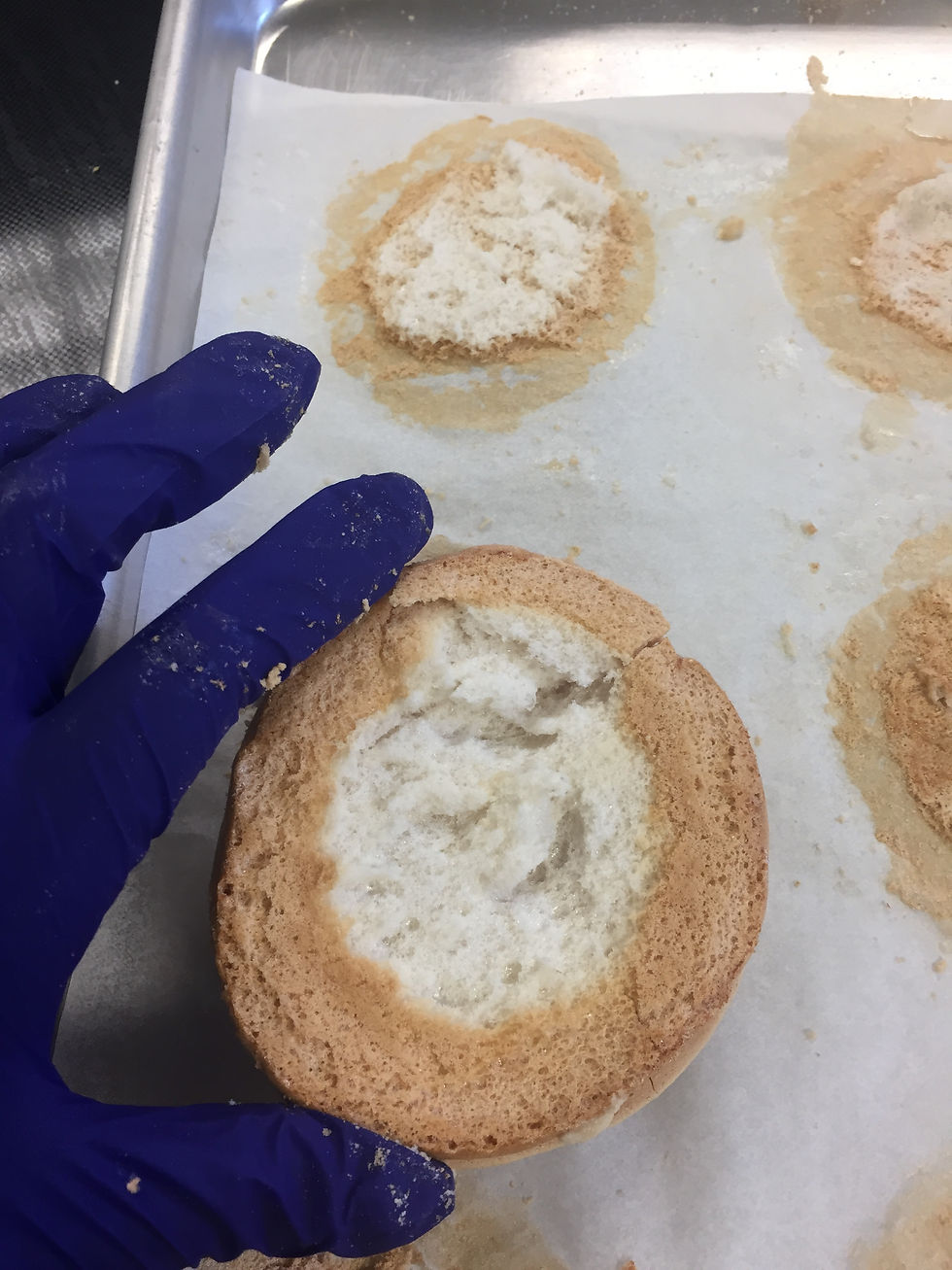
The cooking technique for the pate a choux did not work. The texture of the pate a choux was still underdone on the inside. The outside layer of the pate a choux was drier than expected. The taste of the pate a choux was sweet, and the most prominent flavor was the taste of eggs. The appearance of the pate a choux was a light gold. The cooking technique of the swiss meringue did work. The texture of the baked swiss meringue was too chewy and sticky. The taste of the swiss meringue was sweet, and the most prominent flavor was the sugar. The appearance of the swiss meringue was lightly brown after being baked. The pavlova became deflated after leaving the oven. The cooking technique of the pate brisee, short dough I, and puff pastry did work. However, we are unable to know the texture, taste and flavor as we will prepare these for next week.
Evaluation
The cooking technique for the pate a choux did not work for various reasons. We had cut the recipe in half, which threw off all the ratios in the pate a choux. At the third attempt, we did the full version of the recipe However, the pate a choux did not have a lot volume ,and there was not much hollowness in the middle. One reason is that we only added about 3 eggs rather than the 5 eggs listed in the recipe. We were worried the batter might contain too much liquid, but it did not have enough eggs. The eggs act as the leaving agent that helps with creating height for the puffs. For next time, we will add all the eggs into the batter, and it may be a good idea to test out another recipe. Another reason for an issue with the pate a choux was there was not enough humidity to help with the baking process. Next time, we can wipe the parchment paper with water and/ or use a spray bottle to add more moisture. Another reason for the lack of height could have been caused by the oven temperature at 350. There are multiple places that mention the oven temperature at 400 F. The higher temperature would also give more color. Next time, it would be best to have the oven higher for a few minutes, then lower the temperature so the insides can be cooked. The cooking technique of the swiss meringue did initially work, but it deflated after being taken out of the oven. One cause for the deflation was that the baked meringue needs to be dried out in the oven. Drying out the meringues can create a crisper texture rather than a sticky and chewy texture. Next time, it may be best to leave the baked pavlovas in a warm and partly open oven. This could fix the texture and retain the height of the pavlova. The cooking technique for the puff pastry went well as the lamination process incorporates the butter throughout the dough. However, the process need to be done quickly, before the dough becomes too warm. The dough was done later than the rest of the items, so we were cutting it close for time. Next time, it would be better to do it earlier, so there is enough time for the butter to fully solidify before folding again.
Kodippili, D. (2020, June 30). The Perfect Pavlova (Step by Step Recipe). The Flavor Bender. Retrieved February 24, 2022, from https://www.theflavorbender.com/the-perfect-pavlova-recipe/#:%7E:text=Pavlovas%20can%20go%20flat%20for,This%20is%20normal.
Kodippili, D. (2022, January 1). How to make Perfect Choux Pastry. The Flavor Bender. Retrieved February 24, 2022, from https://www.theflavorbender.com/how-to-make-perfect-choux-pastry/
Conclusions
I feel I did the best at making the puff pastry dough, as the right texture of the classic puff pastry was achieved. The lamination of the butter was done multiple times to ensure that there proper incorporation of the butter. The pate a choux was done three times with varying levels of success due to one or two modifications at each attempt. An additional piece of knowledge I learned is that pavlova's will collapse if they are not fully dried out. Trial and error are important to solve any problem. Knowing what does not work means that you are one step closest to a solution. I still need to practice on making pate a choux as the right texture still needs to be achieved.