WEEK 13
Introduction
Cookery Topic:
Sous Vide/ Molecular Cuisine
Cookery Method:
The cooking methods would vary depending on the dish component. Blending, sautéing, boiling, baking, pureeing, poaching, and whisking.
Dishes:
Poached egg in potato nest with hollandaise mousse and bacon powder,
Pan fried shrimp and lobster with lobster bisque gel, pea puree, beetroot air,
Hot baileys ice cream, and
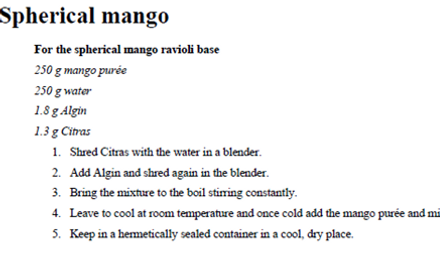
Spherical mango
Prior Knowledge:
I have not had any experience in making molecular gastronomy dishes.
Learning Objectives:
Molecular Gastronomy Define. Molecular Gastronomy. Emulsions. Foams
Plana, A. (2021, November). Week 13: Overview. Retrieved November 12, 2021, from https://auburn.instructure.com/courses/1385357/pages/week-13-overview?module_item_id=19965315.
Inspiration
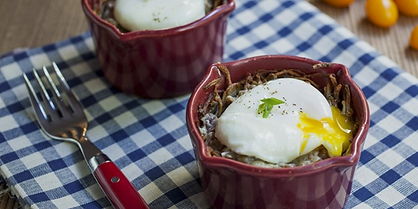
Lester, G. (2014). Poached eggs in potato nests with prosciutto and mushroom sauce. Retrieved November 12, 2021, from https://www.egglandsbest.com/recipe/poached-eggs-potato-nests-prosciutto-mushroom-sauce.

Clavijo, T. (2010, December 7). Molecular gastronomy – spherical mango yolk. Molecular Gastronomy Blog. Retrieved November 12, 2021, from https://moleculargastronomy.wordpress.com/2010/01/09/spherification-mango-ravioli/.
Background
Scientific principles behind the method of cooking:
"Molecular gastronomy , the scientific discipline concerned with the physical and chemical transformations that occur during cooking... Chefs who did not specialize in molecular cooking began adding it to their menus spherification ( liquids that create their own spherical "skin" through gelling agents), culinary foams ( popularized by Adria), and flash frozen balls, among other concoctions." ( This, 2018)
Origin:
" The scientific discipline- which was introduced under the name molecular and physical gastronomy and later shortened to molecular gastronomy- was established in 1988 by Herve This, a physical chemist, and Nicholas Kurti, a former professor of physics at the University of Oxford, who was interested in the scientific aspect of the cooking process. There was extensive research in the field of molecular gastronomy by universities in various . countries. The historical precedents of global gastronomy go all the way back to the 18th century with chemists and physicians. Overtime, there are chefs that have perfected molecular cooking such as Ferran Adria, Andondi Aduriz, Denis Martin, and many more chefs. " (This, 2018)
Methods used:
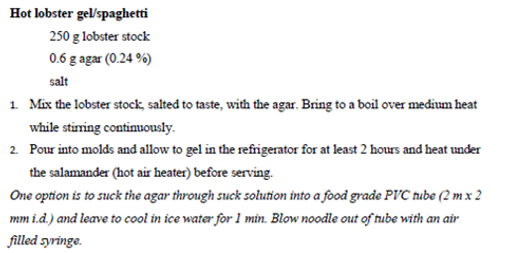
For the process of making the hot lobster gel, the lobster stock, (0. 24%) of agar and salt are needed. All ingredients need to be mixed together over medium heat, while stirring continuously. The, pour into molds and refrigerator for at lest 2 hours and heat under the salamander ( hot air heater) before serving. ( Traynor)
Variations of the dishes:
The gel can vary depending on what liquid will be used. Depending on the form, the chemical will be changed whether it is a powder, foam, or gel. The flavor will also very depending on the liquid, it could also be beef or chicken stock.
Myhrvold, Nathan and This, Hervé. "molecular gastronomy". Encyclopedia Britannica, 22 Jun. 2018, https://www.britannica.com/topic/molecular-gastronomy. Accessed 12 November 2021.
Traynor, M. (2021, November). Recipe Packet for Molecular Gastronomy Module. Retrieved November 12, 2021, from https://auburn.instructure.com/courses/1385357/pages/week-13-lab-recipes?module_item_id=19965316.
Recipes



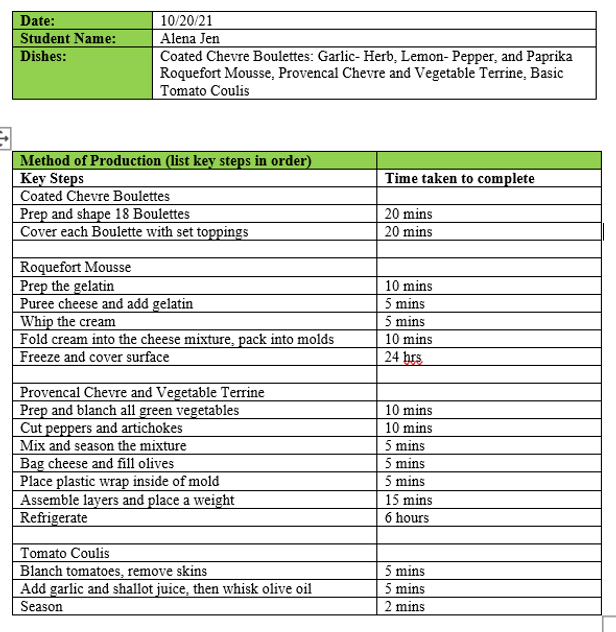
Plan of Work
Reflection
Results:
The texture of the mango sorbet was smooth , the most prominent flavor was sweet. The bright color of the mango was appetizing. The texture of the Hot Baileys ice cream was smoot, with the Baileys being a dominant flavor. The appearance of the poached egg nest was colorful with the hollandaise and parsley. The bacon powder added another texture and another dimension to the overall dish. The pan seared shrimp and lobster dish had a prominent citrus taste. The appearance was color with the redness of the shrimp and lobster. The color of yellow from the lemon zest added yellow and a bright taste. The texture of the lobster gel was not appetizing, it was rubbery with not much flavor.
Evaluation:
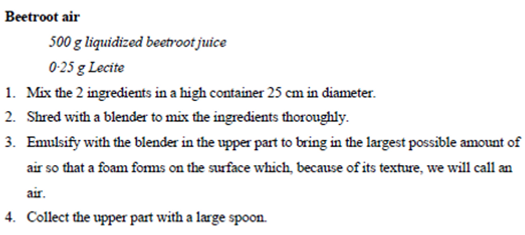
We were unable to execute the beetroot air, as we had to discard it. The plastic part of the blender fell into the mixture, which made it not safe to eat. The plastic part of the lid may not have been on tightly enough, so the next time we can double check to make sure it is on tight enough. The pea puree's texture was not very smooth. The puree was more paste like, and one of reasons it may not have been as smooth was there not enough liquid to make it into a puree. One way to resolve this could be adding a little bit of the lobster to the pea puree. it could also enhance the lobster flavor into the peas. The cooking of the lobster process went well. The flesh was tender, and it complimented well with the citrus of the lemon zest and Cointreau.
Conclusion:
I learned and experienced the spherification process. We were able to have the majority of the molds stay fully intact. Only one of the molds broke, while the others held together. We wrapped the inside of the molds with plastic wrap before putting the lobster gel liquid into the mold. The, we covered the bottom with the plastic wrap and had them sit on top of other molds to stay upright. Patience is key for doing spherification, but patience is also important to not a rush process in any environment. Continue to be patient and willing to try something new when the first plan did not work out. Timing of multiple aspects for one dish is something I still need to work on. The right sequence of tasks are important in achieving the best result. We did not have enough time to redo the beetroot air, so working on better timing could give us more time to try again.
Final Plating


Stages of the Lab