
WEEK 5
Introduction
Cookery Topic:
Fish and Shellfish Cookery
Cookery Method:
To learn about the impact of sustainable seafood has on the hospitality industry, especially in the kitchen. To learn how to cook fish through en papillote.
Dishes:
Crab Cakes, Fish en Papillote, Red Onion Confiture, and Rhubarb Compote
Prior Knowledge:
I have no experience in making crab cakes, but I do enjoy eating them. I have had no experience in cooking fish through the en papillote method. On a few occasions, I have used steam to cook rice in banana leaves.
Learning Objectives:
Explain the difference between wild-harvested and aquaculture seafood. List reasons why the world supplies of wild-harvested fish are being depleted. Discuss why improved abilities to transport fresh and frozen fish have affected demand for fish. Define bycatch and its effect on ocean ecosystems. Explain the different techniques for catching wild fish and their effects on other sea creatures or ocean floor habitats. Describe the role that aquaculture is currently playing to compensate for decreasing wild fish stocks. List the characteristics used to assess the sustainability of wild fishing operations. List the characteristics used to assess the sustainability of aquaculture operations. List major threats currently to the seafood industry. Explain how dead zones are formed and their relationship to agriculture. Discuss some of the factors that chefs should consider when making sustainable seafood choices. Explain what “trash” fish are and how chefs can leverage them in their operations. Describe why it is important for chefs to work with reputable seafood purveyors. List the two major families of algae and discuss their potential impact globally. Explain why it is important for chefs to work with and learn from organizations that provide current scientific information about sustainable seafood choices. (Plana, 2021)
Inspiration
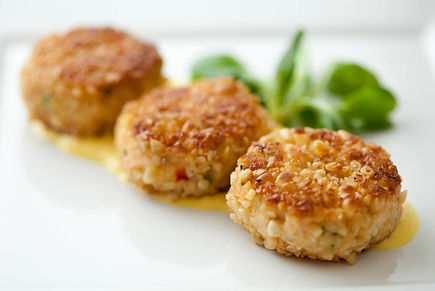
DJ Foodie. (2019, October 27). Miniature crab cakes. DJ Foodie. Retrieved September 16, 2021, from https://djfoodie.com/mini-crabcakes/.

Blue Circle Foods. (2020, December 16). Baked salmon IN Parchment: Blue Circle Foods: Full recipe. Retrieved September 16, 2021, from https://bluecirclefoods.com/baked-salmon-in-parchment/.
Plana, A. (2021, September). Week 5: Overview. Retrieved September 15, 2021, from https://auburn.instructure.com/courses/1385357/pages/week-5-overview-2?module_item_id=19964695.
Background
Scientific principles behind the method of cooking:
En papillote is a moist cooking method where the food is enclosed in a packet or parchment paper then cooked in a oven. Delicate foods like chicken breast and fish can be cooked en papillote as they are cooked quickly with the steam. ( Alfaro, 2019)
Origin:
Crab cakes originated from Native American cuisine specifically from the Chesapeake region, and history suggested that this one of the earliest dishes adopted by settlers. By the 20th century, Maryland, Virginia, and the surrounding area were large crab producers. However, it was only consumed as their was limited refrigeration and transport. Once refrigeration became more readily available, crab meat was transported throughout the entire country. (Costas Inn, 2018)
Methods used:
There is a certain way to fold parchment paper to cook en papillote."
1. Fold a 14 x 12 piece of parchment paper, then cut it into a heart shape.
2.Next, place all vegetables on one side with the fish on top. Add olive oil or butter with a stock/ wine. Season with salt and pepper. Brushing the edges with egg whites can create a tighter seal.
3. Working from one end, begin tightly folding the paper. 4. Continue folding the edges until a seal has been formed. Transfer pouch to a baking sheet and bake." (Nast, 2012)
Variations of the dishes:
The preparation of crab cakes vary by what area of the east coast. In the north, from Baltimore to Pennsylvania, crab cakes are prepared with a thick cream sauce. The crab cakes must be rested for several hours before cooking. On the eastern shore, the cakes are bonded with flour and eggs. The western area has "continental" crab cakes, which include bread or cracker crumbs as fillers. (Costas Inn, 2018). Fish en papillote can be varied by changing out the fish, sauce, and/ or seasoning. The vegetables can also be varied.
Alfaro, D. (2019, October 30). What does the culinary term en papillote mean? Retrieved September 15, 2021, from https://www.thespruceeats.com/en-papillote-culinary-term-definition-995657.
Costas Inn. (2018, April 30). The history of Crab Cakes. Retrieved September 15, 2021, from https://www.costasinn.com/blog/crab-cakes/the-history-of-crab-cakes/.
Nast, C. (2012, May 31). How to fold parchment paper to cook en papillote. Retrieved September 15, 2021, from https://www.bonappetit.com/test-kitchen/inside-our-kitchen/article/how-to-fold-parchment-paper-to-cook-en-papillote.
Recipes


Plan of Work

Reflection
Results:
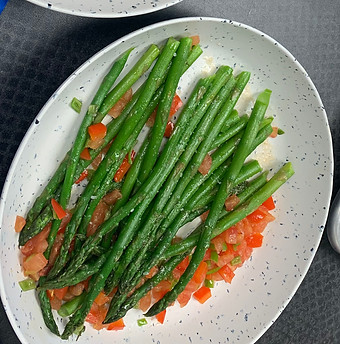
The crab cake's texture was soft in the inside, while the outside was crunchy. The flavor profile of the grab cakes is savory, and the sauce is a little bit spicy, with the Siracha. The appearance of the dish had a reddish sauce that added a pop of color. The fish en papillote's texture was very tender. The fish en papillote has a savory flavor profile. The asparagus with the fish had complimentary flavors. The asparagus added a a nice crunch to overall dish. It added another texture. The asparagus, red tomatoes, and red bell peppers created a more colorful plate.
Food Cost:

Evaluation:
Using the finely grounded crackers created a nice coating for the crab cakes. The combination of sautéing the crab cakes first, then finishing them in the oven was effective solution. The crab cakes were cooked thoroughly, while have a nice sear. The size of crab cakes were consistent sizes, due to weighing them out. The crab cakes were one bite appetizers that did not have a lot binding, so the crab meat flavor was not overshadowed. By using the en papillote method, the fish was very tender. By par cooking the potatoes, the potatoes were tender. When covering the fish with the sauce, it helped contain the moisture of the fish. Roasting the red peppers did not have much of a crunch, so we may need to roast the red peppers longer. We peeled the zucchini due to the skin having multiple soft spots. They were julienned and roasted, but they turned out too limp, and it was not very appealing. One way to mediate this would be creating larger slices instead of a julienne cut. We blanched the asparagus, placed it in a ice bath, then sautéed them right before plating. They retained their nice green color and crunch due to this process.
Final Plating


Conclusion:
I learned about how the process of crab cakes were made. It is best practice to limit the amount of binding agents such as egg and mayo, which can dominate the crab cakes. We did not use egg, and the crab cakes were still holding together, The combination of searing and baking were successful. I learned how to cook a fish using the fish en papillote method. It would be great to utilize this technique for other delicate fish and chicken. The results created a tender texture rather than a dry texture. Cooking through a pouch was eye-catching, and it did not take long for the fish to cook. I learned how to skin a fish for the first time, and it takes patience to not rush the process. Due to the delicate nature of the fish, the tearing of the filet could occur, but it should be minimal. We were able to have all of our dishes plated, but I need to do better on cleaning as I go. A clean space helps with maintaining a clear mindset, so the transition between each task is smoother. This could also be applied outside of kitchen.
Stages of the Lab

Crackers into a food mill for the crab cakes' crust.
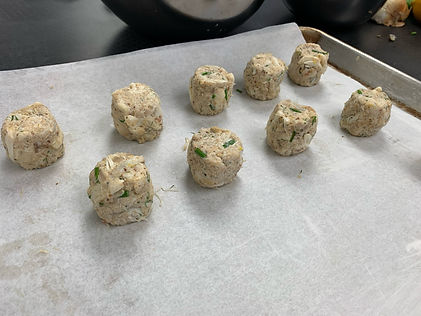
Crab cakes formed before searing.

Skinning the red snapper and yellowtail snapper.
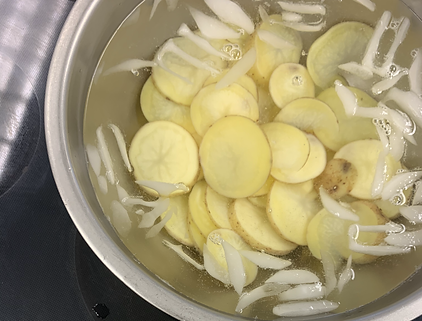
Thin slices of potatoes in ice bath, before placing them as the bottom layer of the fish en papillote.

Crab cakes seared in avocado oil.

Sliced potatoes, dill, fish, and sauce outside of the pouch. This is the last stage before going into the oven.